Gravity, steam and railways
Isaac Newton explained gravity through his theory of universal gravitation, published in 1687. The same force helps explain both an object falling towards the Earth and the Moon’s orbit.
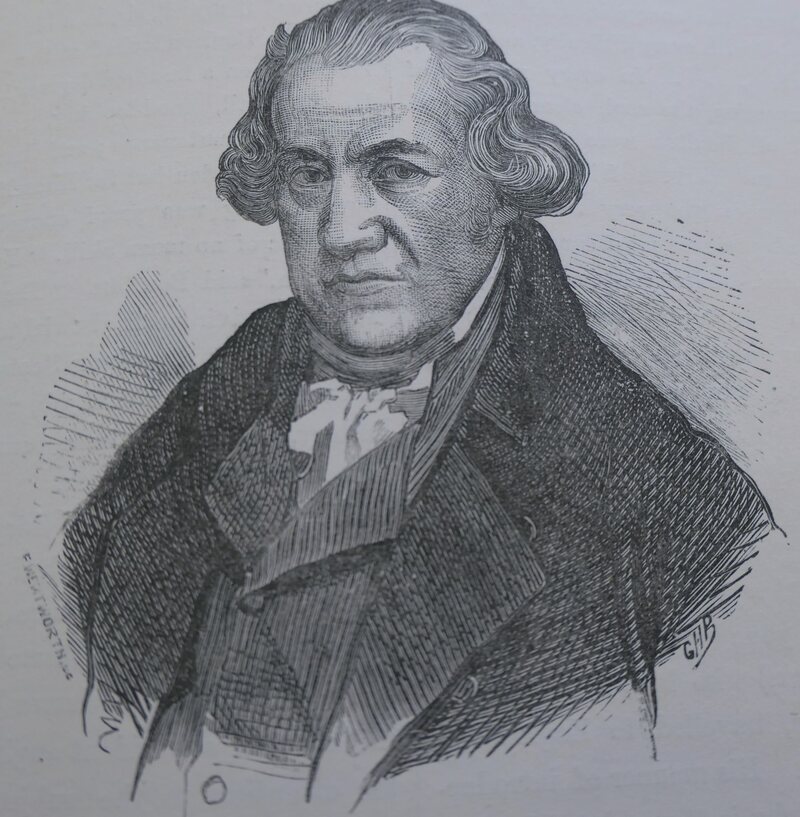
Inventions changed work and travel: James Watt improved the steam engine, Richard Arkwright developed textile machinery, and Isambard Kingdom Brunel designed railway lines, bridges, tunnels, and ships. Learn each inventor alongside the development and its impact.
Richard Trevithick built the first successful steam-powered locomotive to haul a load on rails in 1804. George and Robert Stephenson later helped make railway engines practical; Robert Stephenson and Company built Rocket in 1829 for the Rainhill Trials. Rocket’s success helped establish steam railways.
The steam sequence is engine improvement → early locomotive → successful railway technology. Watt improved the engine; Trevithick’s locomotive hauled a load in 1804; Rocket succeeded in 1829. The medicine sequence is Fleming’s discovery in 1928 → development by Florey and Chain → shared Nobel Prize in 1945.
Learn the scientific names by their distinct contributions. Isaac Newton is associated with gravity and the laws of motion. Charles Darwin explained evolution by natural selection in On the Origin of Species, published in 1859. Alexander Graham Bell developed the telephone. John Logie Baird helped develop television.
Gravity, steam and railways oldest first
- Newtongravity, 1687
- Wattsteam engine
- Arkwrightcotton machines
- Trevithicklocomotive, 1804
- StephensonRocket, 1829
- Darwinevolution, 1859
Medicine and biology
John Macleod, a Scottish physician and researcher, was a co-discoverer of insulin. Insulin is used to treat diabetes. This contribution is separate from Fleming’s discovery of penicillin, an antibiotic for bacterial infections.
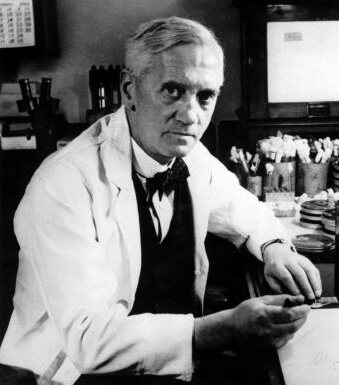
Alexander Fleming discovered penicillin in 1928 while researching influenza. Howard Florey and Ernst Chain developed it into a usable drug, and it entered mass production in the 1940s. Fleming, Florey, and Chain shared the 1945 Nobel Prize in Medicine.
Work in London and Cambridge led to the discovery of the structure of DNA in 1953. James Watson and Francis Crick built the double-helix model using evidence including X-ray work by Rosalind Franklin and Maurice Wilkins. Watson, Crick and Wilkins shared the 1962 Nobel Prize; Franklin, who had died in 1958, was not a recipient. Understanding DNA contributed to medicine and to methods used in investigating crime.
Physiologist Sir Robert Edwards and gynaecologist Patrick Steptoe pioneered in-vitro fertilisation, or IVF, as a treatment for infertility. The world’s first IVF baby was born in Oldham in 1978. Sir Peter Mansfield was a co-inventor of MRI scanning, which produces detailed internal images without an operation. Ian Wilmut and Keith Campbell were associated with the team that cloned Dolly the sheep in Scotland in 1996.
MRI stands for magnetic resonance imaging. Sir Peter Mansfield helped develop this scanning technology, allowing doctors to examine internal organs in detail without surgery. MRI is used in diagnosis and medical research.
Sir Ian Wilmut (1944–2023) led the Roslin Institute team involved in cloning Dolly the sheep in Scotland in 1996. Dolly was the first mammal cloned from an adult body cell. Wilmut died in September 2023.
Medicine and biology oldest first
- Macleodinsulin
- Flemingpenicillin, 1928
- Watson and CrickDNA, 1953
- Edwards and SteptoeIVF
- MansfieldMRI
- WilmutDolly the sheep, 1996
Flight, radar, TV and computing
John Logie Baird, a Scotsman, developed mechanical television in the 1920s. In 1927 he sent a television signal from London to Glasgow using telephone wires. The Science Museum Group dates this transmission to 1927, rather than the 1932 date in the older study text. This milestone is distinct from the BBC’s regular television service, which began in 1936.
Frank Whittle developed the jet engine. Alan Turing made major contributions to computing and wartime code-breaking. Tim Berners-Lee invented the World Wide Web, a system of linked pages and resources that uses the existing internet.
Sir Robert Watson-Watt developed radar, using radio waves to detect aircraft. A successful test took place in 1935. Sir Bernard Lovell later used experience with radar in radio astronomy and built the radio telescope at Jodrell Bank in Cheshire. Radar locates objects; radio astronomy studies signals from space.
Sir Christopher Cockerell invented the hovercraft in the 1950s. It travels on a cushion of air. Another British aircraft development, the Harrier jump jet, can take off vertically. Concorde was a British–French supersonic passenger aircraft: its first flight was in 1969, passenger service began in 1976 and it retired in 2003.
James Goodfellow patented card-and-PIN cash-machine technology in 1966. An ATM is an automatic teller machine, often called a cashpoint. Barclays put a different first cash dispenser into use at Enfield in north London in 1967, developed by John Shepherd-Barron’s team. Goodfellow’s contribution to the modern PIN system should not be confused with sole credit for that first installed machine.
Tim Berners-Lee invented the World Wide Web at CERN. He proposed a system of linked information in 1989 and had its first browser and server working by the end of 1990. The Web uses the internet; it is not the same invention as the internet. The December 1990 milestone in older study material concerns the first working Web system, following the original proposal in 1989.
Flight, radar, TV and computing oldest first
- Bairdtelevision
- Whittlejet engine
- Watson-Wattradar
- Turingcode-breaking
- Cockerellhovercraft
- GoodfellowPIN cash machine
- Berners-LeeWorld Wide Web
Dates to keep separate
First locomotive, then Rocket.
Memory tip: Watt → improved steam engines. Trevithick → 1804 locomotive. Stephenson → 1829 Rocket.
Discovery, recognition, public healthcare.
Memory tip: The discovery came before the Second World War; the Nobel award at its end; the NHS after it.