The lesson
Early communities lived by hunting and gathering. About 6,000 years ago, people arriving from south-east Europe brought farming; Stonehenge and the village of Skara Brae in Orkney are among the archaeological sites associated with early communities.
Recognise prehistoric sites
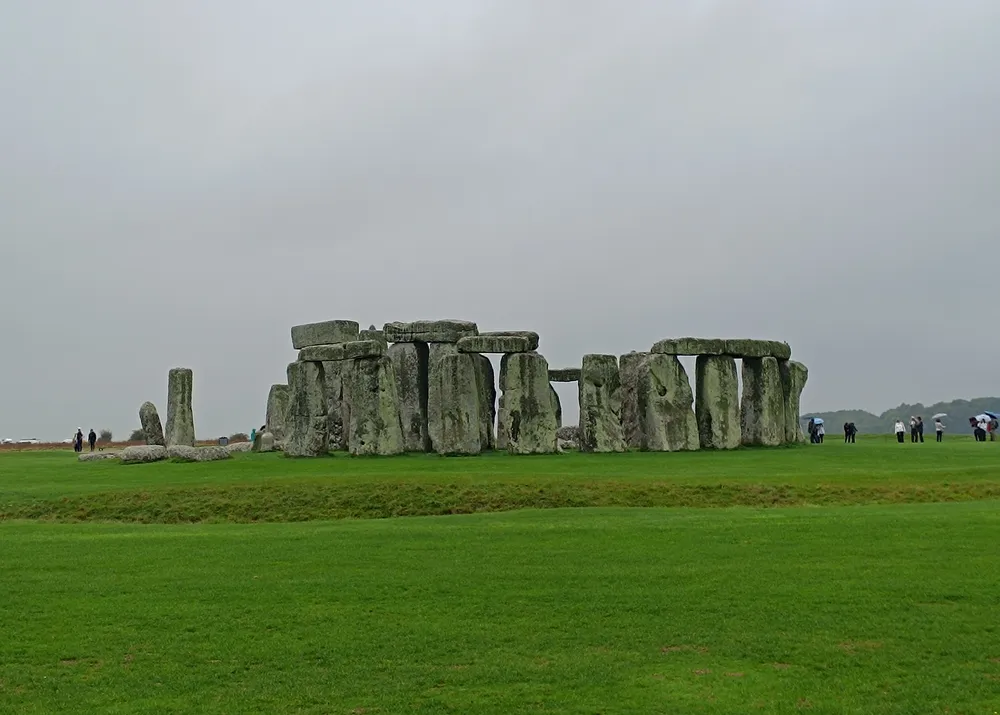
Stonehenge, Wiltshire — a prehistoric stone monument. The upright stones and horizontal lintels make its surviving stone circle recognisable.
Hotolmo22 · CC0 · Wikimedia Commons; resized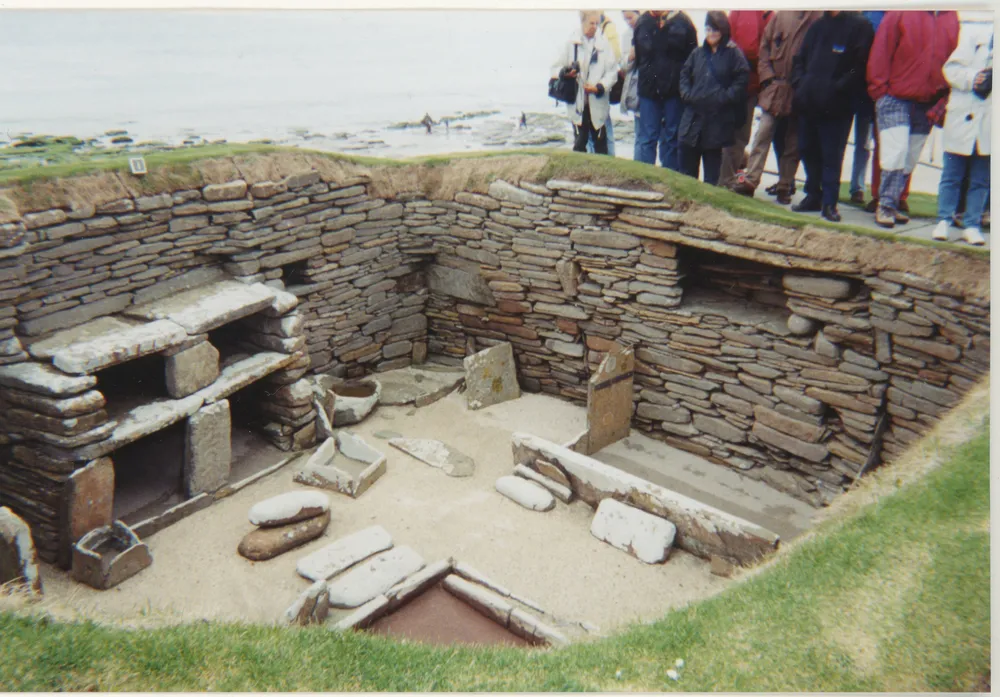
Skara Brae, Orkney, Scotland — a Neolithic village. Its surviving stone-built homes show permanent settlement in prehistoric Britain. Photograph taken in August 2000.
Libasstref · CC0 · Wikimedia Commons; resizedIn the Bronze Age, people made objects from bronze and gold. In the Iron Age, communities built hill forts such as Maiden Castle in Dorset. Celtic languages and culture developed, and the use of coins shows how trade and social organisation were changing.
Britain was connected to continental Europe by land until rising seas created the English Channel around 10,000 years ago. Early people lived by hunting animals and gathering wild plants. Farming arrived about 6,000 years ago: people grew crops, kept animals, and built more permanent settlements.
Stonehenge in Wiltshire and Skara Brae in Orkney are important prehistoric sites. Stonehenge is a stone monument; Skara Brae preserves the remains of a village. About 4,000 years ago, people began using bronze for tools and weapons. Later Iron Age communities used iron, lived in roundhouses, and built hill forts.
Bronze Age communities buried their dead in round barrows, which are burial mounds. They made tools, ornaments and weapons from bronze and gold. Iron Age communities later used iron tools and weapons and produced the first coins minted in Britain, sometimes bearing kings’ names. Celtic languages linked these communities with others in Europe.
The earliest communities in Britain lived in the Stone Age. They hunted animals, including deer and horses, and gathered wild plants. A land bridge allowed movement between Britain and continental Europe before rising seas separated them. The first farming communities arrived about 6,000 years ago, with ancestry traced to south-east Europe. They built houses, tombs and monuments as well as cultivating crops and keeping animals.
Stonehenge is in Wiltshire, England. Its alignment with the midsummer sunrise and midwinter sunset connects it with the seasonal cycle. Archaeological evidence suggests that people gathered in the surrounding landscape for ceremonies and feasting. It also served as a burial place. Its full purpose is not known; seasonal ceremonies are an interpretation supported by archaeological evidence.
Skara Brae is a Stone Age village on Orkney, off Scotland’s north coast. Its surviving stone houses and furniture help archaeologists understand everyday life around 5,000 years ago. Historic Environment Scotland describes it as the best-preserved Neolithic settlement in Western Europe. That description concerns the survival of its buildings and evidence of daily life.
Bronze Age metalworkers made tools, weapons, ornaments and gold objects. Iron later replaced bronze for many tools and weapons. Iron Age communities lived in roundhouses, sometimes in defended hill forts such as Maiden Castle in Dorset. Most people were farmers, craftspeople or warriors. They spoke Celtic languages related to languages still used in Wales, Scotland and Ireland. Iron Age communities minted Britain’s first coins; some carried the names of rulers.
Practise event order