Roman Britain: Caesar and Claudius
1 min 18 secIncludes on-screen subtitles. Read the written lesson.
The lesson
Julius Caesar’s invasions in 55 and 54 BC did not establish lasting Roman rule. Emperor Claudius led the successful invasion in AD 43. The Romans built roads, towns, forts, and public buildings; Boudicca, queen of the Iceni, led a major revolt against Roman rule.
Hadrian’s Wall marked the northern frontier of the empire in Britain, with forts along its length. Roman influence lasted for centuries, and Christianity was present by the later Roman period. In AD 410 the Roman army left Britain to defend other parts of the empire.
Recognise the Roman frontier
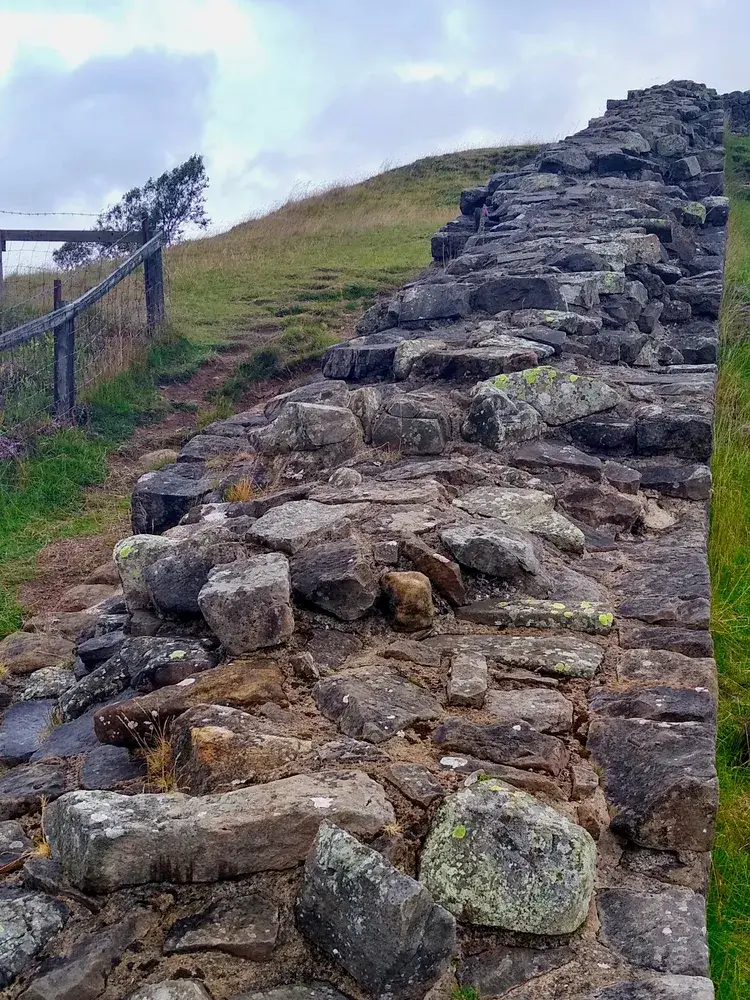
Hadrian’s Wall — a Roman frontier across northern England. This surviving section is east of Walltown Quarry in Northumberland.
Mertbiol · CC0 · Wikimedia Commons; resizedJulius Caesar’s expeditions in 55 and 54 BC failed to establish permanent Roman control. Claudius’s invasion in AD 43 began the long period of Roman rule. Boudicca was a British queen of the Iceni who resisted Roman power.
The Romans never conquered all of what is now Scotland. Hadrian’s Wall runs across northern England, south of the modern England–Scotland border. After the army withdrew in AD 410, Roman towns and roads remained, but political control changed.
Roman roads, public buildings and laws changed life in Britain. Christianity appeared in Britain during the third and fourth centuries AD. Housesteads and Vindolanda are surviving Roman sites in the Hadrian’s Wall area, in northern England. A statue near Westminster Bridge commemorates Boudicca’s resistance to Rome.
Romans and Britons oldest first
- Julius Caesar55 and 54 BC
- Emperor ClaudiusAD 43 invasion
- Boudiccarevolt