First World War
Before the First World War, the government introduced old-age pensions and free school meals. MPs were paid for their work, helping people without private wealth to serve in Parliament. These early changes preceded the larger welfare reforms after the Second World War.
The First World War lasted from 1914 to 1918 and caused enormous loss of life. The Battle of the Somme in 1916 brought around 60,000 British casualties on its first day. After the war, political changes included the partition of Ireland.
The First World War began in 1914 and ended in 1918. British forces fought alongside allies including France. The first day of the Battle of the Somme in 1916 caused around 60,000 British casualties. The armistice took effect on 11 November 1918; Remembrance Day is marked on 11 November.
The assassination of Archduke Franz Ferdinand on 28 June 1914 triggered a crisis amid nationalism, militarism and imperial rivalry. Britain fought with the Allies, including France and Russia and later the United States. Their opponents included Germany, Austria-Hungary and the Ottoman Empire. People from India, the Caribbean, Africa, Canada, Australia and New Zealand served with Britain. More than two million British casualties were recorded during the war.
First World War Allies included Britain, France, Russia, Belgium, Serbia and Japan, with Romania, Greece and the United States joining later. Germany, Austria-Hungary, the Ottoman Empire and Bulgaria formed the Central Powers. Irish Home Rule proposals faced opposition, especially among Ulster unionists; the 1914 Home Rule Act was suspended during the war. In the Second World War, Hitler had come to power in Germany in 1933. Britain, Poland, France, Commonwealth countries, and later the Soviet Union and United States fought the Axis powers led by Germany, Italy and Japan. Germany invaded the Soviet Union in 1941. These lists describe wartime alliances, not permanent national friendships or hostilities.
The 1916 Easter Rising was an Irish nationalist uprising in Dublin. Fighting continued after the war until a treaty in 1921. In 1922 the Irish Free State was established while six northern counties remained in the UK as Northern Ireland. The southern state became a republic in 1949. Disputes over the border and political allegiance continued and later contributed to the Troubles.
Between the wars
In 1918 some women aged 30 and over who met qualifying conditions gained the vote. Equal voting terms at age 21 followed in 1928. The Great Depression began in 1929 and caused serious unemployment between the two world wars.
The Great Depression affected regions differently: heavy industries such as shipbuilding suffered severe unemployment, while car and aircraft manufacturing developed. John Maynard Keynes published influential economic theories. Graham Greene and Evelyn Waugh were prominent writers. BBC radio broadcasts began in 1922 and a regular television service began in 1936.
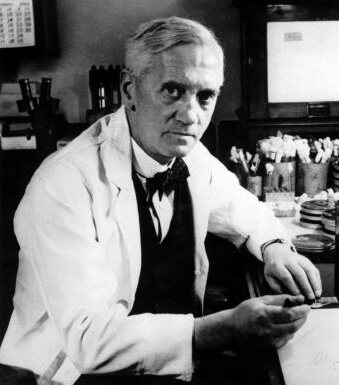
Scientific advances also changed medicine. Alexander Fleming discovered penicillin in 1928. Howard Florey and Ernst Chain helped turn the discovery into a usable medicine; production expanded in the 1940s, and Fleming, Florey, and Chain shared the 1945 Nobel Prize in Medicine.
Ernest Rutherford’s research at Manchester helped establish the nuclear model of the atom. Later atomic and nuclear research involved many scientists in several countries. The wartime atomic bombs must not be credited as a single invention by Rutherford. His association in this history is scientific understanding of atomic structure, not sole responsibility for the weapons used in 1945.
Second World War
The Second World War began in 1939. The Battle of Britain, the Blitz, and the evacuation from Dunkirk are among the events associated with Britain’s wartime experience. Winston Churchill became Prime Minister in 1940; Britain and its allies won the war in 1945.
The Second World War began in 1939 when Britain declared war after Germany invaded Poland. In 1940, troops were evacuated from Dunkirk, Winston Churchill became Prime Minister, and the RAF fought the Battle of Britain. The Blitz was a sustained bombing campaign against British cities.
At Dunkirk in 1940, naval vessels and civilian boats evacuated over 300,000 Allied soldiers. Spitfires and Hurricanes were key RAF fighters in the Battle of Britain that summer. The Blitz brought night bombing of cities including London and Coventry. Japan’s attack on Pearl Harbor in December 1941 brought the United States into the war. On D-Day, 6 June 1944, Allied forces landed in Normandy. Germany was defeated in May 1945; war against Japan ended in August after atomic bombs were dropped on Hiroshima and Nagasaki.
Winston Churchill became Prime Minister in May 1940. His wartime speeches included “blood, toil, tears and sweat”, “we shall fight on the beaches” and praise for RAF crews as “the few”. He lost the 1945 election and returned as Prime Minister in 1951. He received a state funeral in 1965.
Victory in Europe was marked on 8 May 1945, known as VE Day. The war against Japan ended later in 1945. The United Nations was established after the war to support international peace and cooperation. Keep 1914–1918 and 1939–1945 as two separate date ranges.
Dates to keep separate
A partial vote, then an equal vote.
Memory tip: 1918 → some women at 30. 1928 → equal voting rights at 21.
Discovery, recognition, public healthcare.
Memory tip: The discovery came before the Second World War; the Nobel award at its end; the NHS after it.