The lesson
British music spans classical and popular forms. Composers include Henry Purcell, George Frideric Handel, Edward Elgar, and Benjamin Britten. The BBC Proms at the Royal Albert Hall are a major classical music event.
Recognise the Proms venue
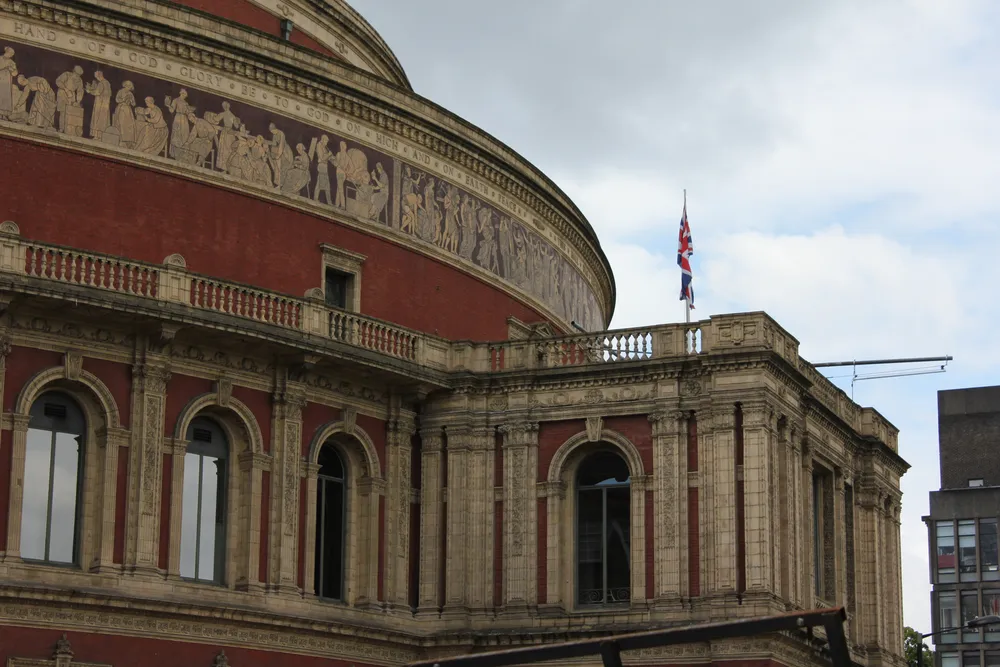
Royal Albert Hall, London — a principal venue for the BBC Proms. This 2011 view shows its curved red-brick façade and decorative frieze.
Perituss · CC0 · Wikimedia Commons; resizedThe Beatles and the Rolling Stones are examples of British popular music with international influence. Glastonbury is a major music festival, while the National Eisteddfod of Wales celebrates Welsh culture and includes performances and competitions, many conducted in Welsh.
The National Eisteddfod of Wales moves to a different location in Wales each year. It is not held permanently in one town. Its competitions and performances celebrate Welsh language, literature, music and culture.
Henry Purcell was an English composer of the seventeenth century. George Frideric Handel was born in Germany and became a British citizen; his works include Messiah and Water Music. Edward Elgar wrote the Pomp and Circumstance marches. Benjamin Britten composed works including the opera Peter Grimes.
The Proms are an annual series of classical music concerts, with many performances at the Royal Albert Hall in London. Popular music includes the Beatles, the Rolling Stones, and later performers across many genres. The National Eisteddfod celebrates Welsh culture, language, music, and literature.
Gustav Holst composed The Planets, a suite with movements named for planets. Music from Jupiter became the tune of I Vow to Thee, My Country. Edward Elgar’s Pomp and Circumstance March No. 1 supplies the music for Land of Hope and Glory, often heard at the Last Night of the Proms.
Ralph Vaughan Williams drew strongly on English folk music for his orchestral and choral works. William Walton wrote film scores, operas and coronation marches as well as Façade and the choral work Belshazzar’s Feast. These composers belong to the twentieth-century classical tradition.
Henry Purcell was organist at Westminster Abbey and wrote church music and operas. Handel became a British citizen in 1727; his Water Music was written for George I and Music for the Royal Fireworks for George II. Benjamin Britten wrote Peter Grimes, Billy Budd and The Young Person’s Guide to the Orchestra, which uses a theme by Purcell. Britten founded the Aldeburgh Festival in Suffolk.
The Mercury Prize recognises an album from the UK and Ireland. The Brit Awards recognise popular-music achievements in several categories. The Proms is an eight-week summer classical concert season, organised by the BBC since 1927. Large music venues include Wembley Stadium and the O2 in London and the Scottish exhibition centre in Glasgow. Festivals have included Glastonbury, the Isle of Wight Festival and, historically, V Festival.
British popular music developed through several movements: the Beatles and Rolling Stones in the 1960s; punk in the 1970s; and heavy-metal bands including Iron Maiden and Saxon. Britpop bands included Blur and Oasis, while the 1990s also brought successful boy and girl groups such as the Spice Girls. Popular music includes styles shaped by migration, including British Asian music.
Migration has helped shape British music. Bhangra developed from Punjabi musical and dance traditions and became influential in British Asian popular music, combining traditions with other modern styles. The UK also has folk, classical, jazz and pop traditions; no single genre represents all its communities.
Composers oldest first
- PurcellWestminster Abbey
- HandelMessiah
- ElgarPomp and Circumstance
- Vaughan WilliamsEnglish folk music
- HolstThe Planets
- WaltonBelshazzar’s Feast
- BrittenPeter Grimes