London
The Crown Jewels are kept at the Tower of London, on the River Thames. Buckingham Palace is a royal residence. The Elizabeth Tower stands at Parliament.
The Tower of London stands beside the River Thames. St Paul’s Cathedral is associated with Christopher Wren. National parks protect important landscapes while allowing people to visit and enjoy them. Country associations are useful memory anchors: Giant’s Causeway → Northern Ireland; Lake District → England.
Big Ben is the great bell at Parliament; Elizabeth Tower houses the clock. The Eden Project in Cornwall contains plants in giant greenhouse-like biomes and supports environmental projects. Loch Lomond and the Trossachs National Park is in western Scotland. Loch Lomond is mainland Britain’s largest freshwater expanse by surface area.
Big Ben formally names the great bell at Parliament. It does not formally name the tower or the entire clock. Construction of the tower began in 1843. The Great Clock started on 31 May 1859, and Big Ben first struck on 11 July 1859. The Clock Tower was renamed Elizabeth Tower in 2012 for Elizabeth II’s Diamond Jubilee. Its clock’s 150th anniversary was in 2009; descriptions such as “over 150 years old” or “over 175 years old” depend on the date and the feature being described.
Around the UK
The examples cover all parts of the UK: the Tower of London and Elizabeth Tower in London, the Eden Project in Cornwall, Edinburgh Castle, Giant’s Causeway in Northern Ireland, and Loch Lomond in Scotland. The Elizabeth Tower was named in 2012 for Queen Elizabeth II’s Diamond Jubilee.
Recognise landmarks across the nations
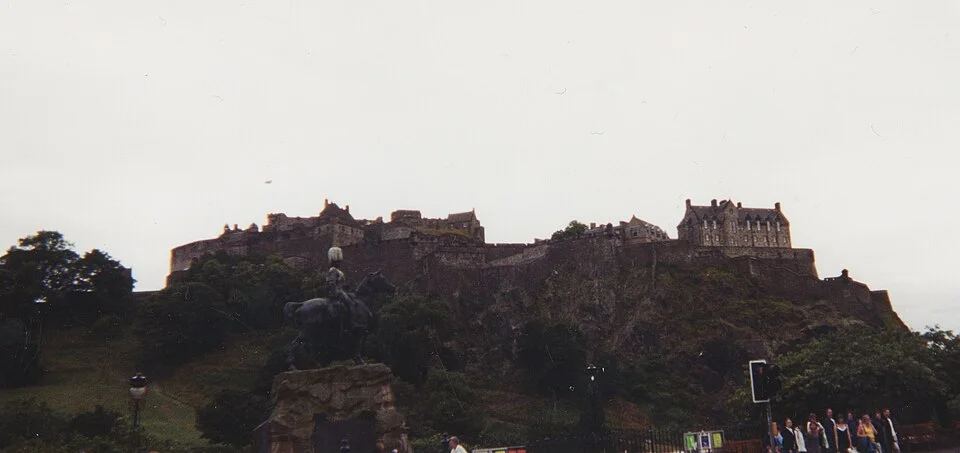
Edinburgh — capital of Scotland. Edinburgh Castle, photographed in August 2000.
Libasstref · CC0 · Wikimedia Commons; resized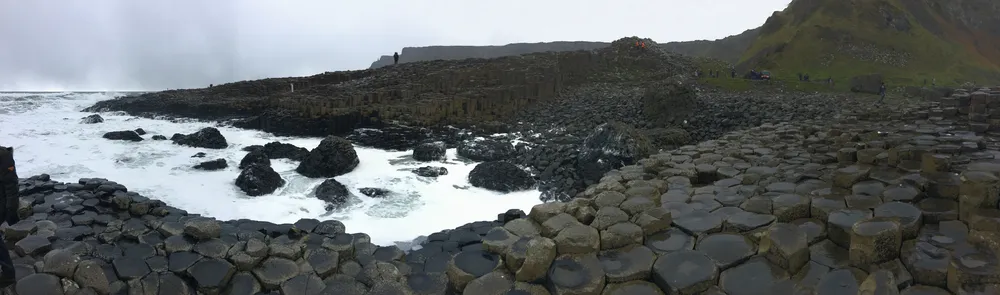
Giant’s Causeway, Northern Ireland — interlocking basalt columns formed through volcanic activity. The coastal setting and column shapes distinguish this natural landmark from a built monument.
Jriley17 · CC0 · Wikimedia Commons; resized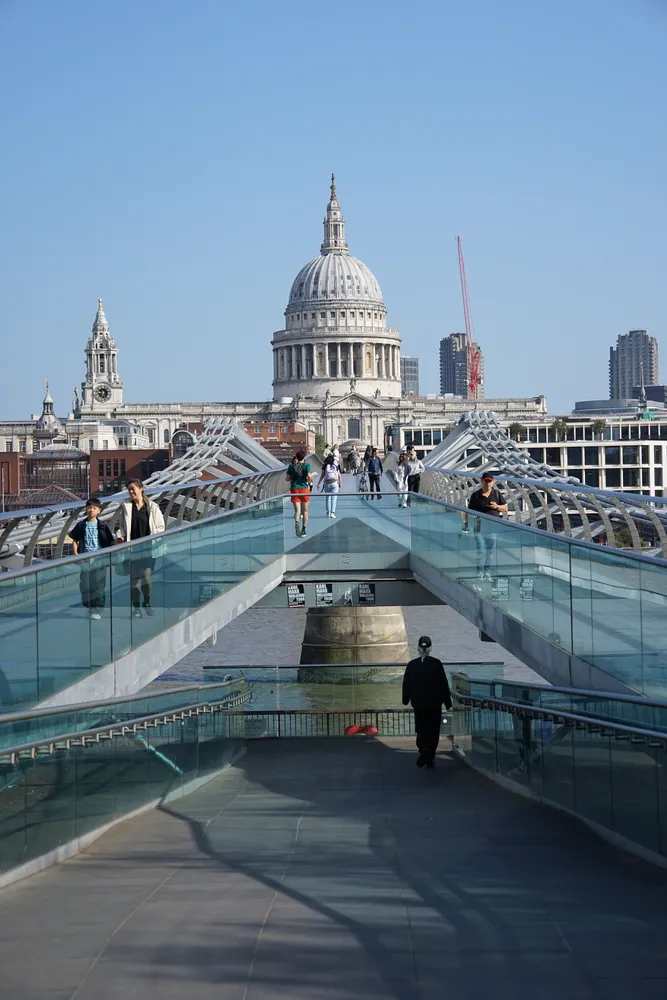
St Paul’s Cathedral, London — designed by Christopher Wren after the Great Fire of 1666. The Millennium Bridge is in the foreground.
ThunderFox24 · CC0 · Wikimedia Commons; resizedStonehenge is in Wiltshire in England. The Lake District is in north-west England. Edinburgh Castle is in Scotland; Snowdonia, also called Eryri, is in Wales; the Giant’s Causeway is on the north coast of Northern Ireland.
The Eden Project is in Cornwall in south-west England. Its large greenhouse-like biomes house plants from different parts of the world. Eden is an educational charity and social enterprise. Its work links plants, people and the environment through nature education, environmental action and community projects in the UK and internationally.
Edinburgh Castle dominates the skyline from its rock above Scotland’s capital. It has a long history as a stronghold and royal residence, including medieval buildings such as St Margaret’s Chapel. It is cared for by Historic Environment Scotland, the current public body, rather than the former agency name Historic Scotland. Historical background does not depend on changing visitor opening times or admission prices.
The Giant’s Causeway is on Northern Ireland’s north-east coast. Its basalt columns formed when a thick body of volcanic lava cooled and cracked. The British Geological Survey places the volcanic sequence at about 60 million years ago. The older study caption’s approximation of 50 million years should not be treated as the modern geological estimate. Learn the secure association of Northern Ireland, volcanic lava and basalt columns.
The London Eye is a 135-metre Ferris wheel on the south bank of the River Thames, built for the millennium celebrations. Snowdon, also called Yr Wyddfa, is the highest mountain in Wales, in Eryri (Snowdonia). Yeoman Warders, known as Beefeaters, give tours at the Tower of London. Windermere is the largest lake in England; Wastwater in the Lake District was voted Britain’s favourite view in a 2007 television poll.
Loch Lomond and the Trossachs National Park lies in western Scotland. The National Park Authority gives its area as approximately 720 square miles, or 1,865 square kilometres. This is the area of the whole park, not Loch Lomond’s water surface. Loch Lomond is mainland Britain’s largest freshwater lake by surface area, not its deepest lake or its largest by water volume, and not the largest lake in the entire UK.
Loch Lomond is celebrated in the Scottish song The Bonnie Banks o’ Loch Lomond. The National Park Authority identifies this song association alongside the loch’s landscape. Pair the song with Loch Lomond, rather than with Loch Ness or another Scottish loch.
Countryside and access
Other notable places include castles, gardens, and protected landscapes. National parks and heritage organisations help preserve places for people to visit. Giant’s Causeway is a natural landmark formed by volcanic activity. The British Geological Survey dates the volcanic sequence to about 60 million years ago; the older study caption gives an approximation of 50 million.
means relating to the countryside, rather than towns or cities.
National parks are protected landscapes where people also live and work. Public footpaths allow countryside walking. The National Trust cares for buildings, coastline and countryside in England, Wales and Northern Ireland; the National Trust for Scotland is a separate charity. The National Trust was founded by three volunteers in 1895. Its volunteer count changes and should be linked to a dated report.
A public footpath permits walking along a route, even where the surrounding land is privately owned. It does not open every neighbouring field to the public. In England and Wales, mapped open-access land also provides walking access subject to restrictions. Use permitted routes, respect signs, close gates where appropriate, protect wildlife and livestock, and take litter home. Northern Ireland has its own rights-of-way arrangements; do not assume English open-access rules apply there.
Scotland’s access rights extend over much land and inland water when exercised responsibly under the Scottish Outdoor Access Code. They are not unrestricted rights to enter every garden, building or cultivated area. Respect people’s privacy, avoid damage and disturbance, keep dogs under proper control and follow local restrictions. Scottish rights are broader than simply staying on a public footpath, but they are not permission to go anywhere or do anything.