The lesson
Saint Andrew, also written St Andrew, is the patron saint of Scotland. St Andrew’s Day is 30 November. The Scottish flag, the Saltire, has a white diagonal cross associated with St Andrew on a blue background.
Recognise the flags
Northern Ireland has no separate current official national flag. The Union Flag is used officially. Neither the Ulster Banner nor St Patrick’s saltire is shown here as a current Northern Ireland national flag.
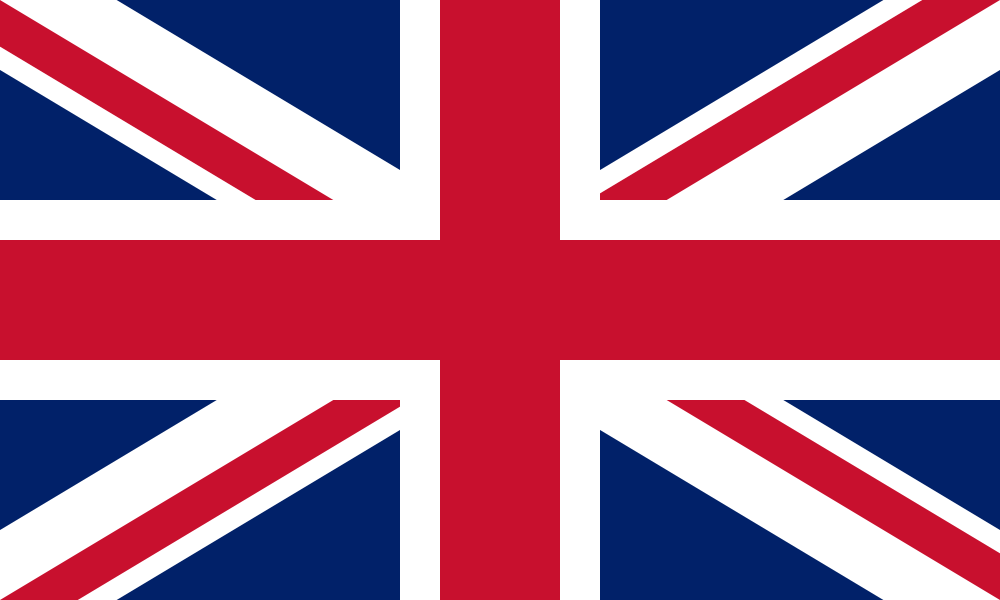
United Kingdom — the Union Flag. Its crosses are associated with St George, St Andrew and St Patrick; Wales has no separate cross in this design.
Union Flag · public domain · Wikimedia Commons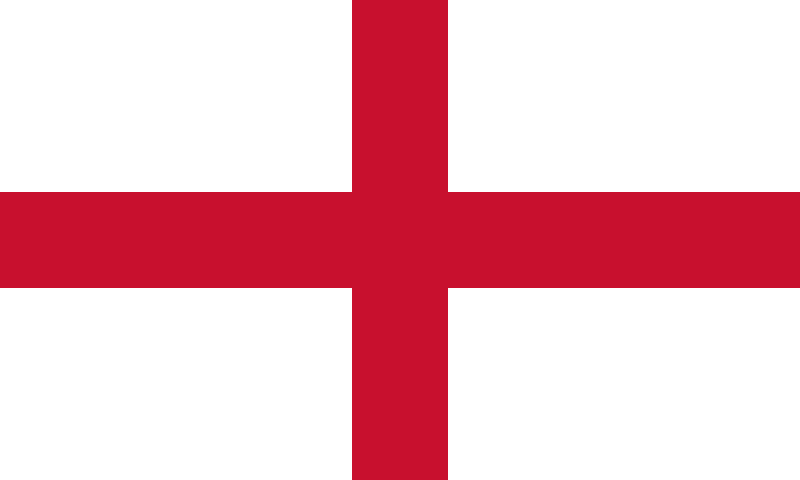
England — St George’s Cross.
Nicholas Shanks · public domain · Wikimedia Commons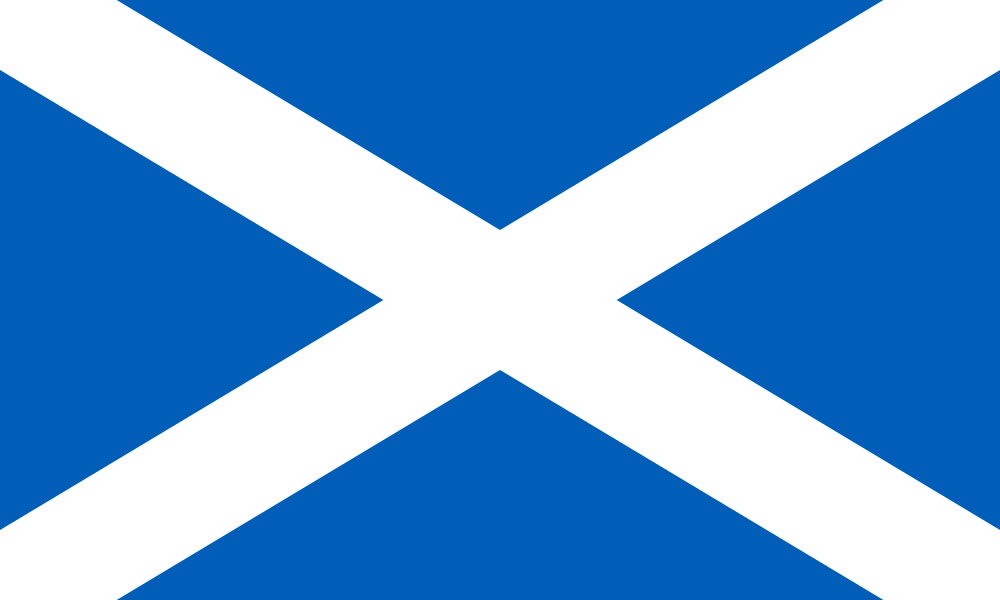
Scotland — St Andrew’s Cross, also called the Saltire.
Scottish Saltire · public domain · Wikimedia Commons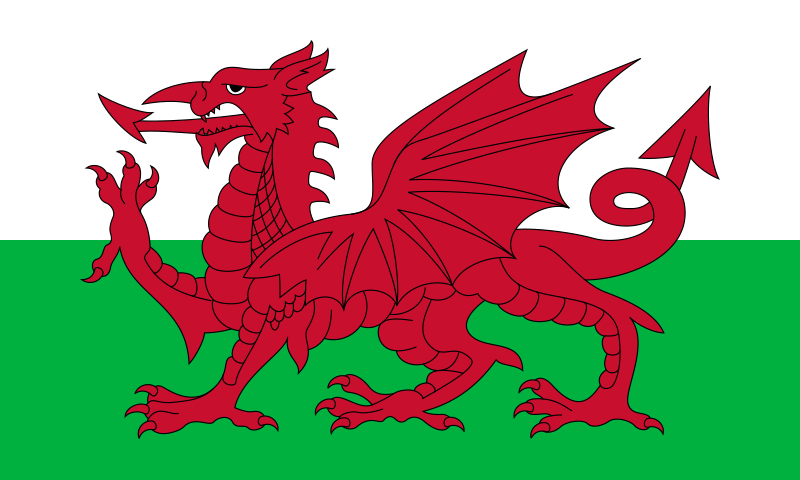
Wales — the Red Dragon (Y Ddraig Goch).
Tobias Jakobs / Open Clip Art Library · CC0 · Wikimedia CommonsChristianity has shaped the UK’s history and institutions, but people in the UK follow many religions or no religion. The Church of England is the established church in England. The Church of Scotland has a separate Presbyterian tradition and is not governed in the same way.
The UK is home to many faith communities, and people have freedom of religion. Faith traditions are also linked with patron saints and their days in the four nations. Population figures should always be read with their survey year, rather than treated as current statistics.
The Church of England is Protestant, and its senior bishop is the Archbishop of Canterbury. The sovereign is its Supreme Governor. The Church of Scotland is a Presbyterian church and has different arrangements; the King is not its head in the same way.
Patron saints and their days
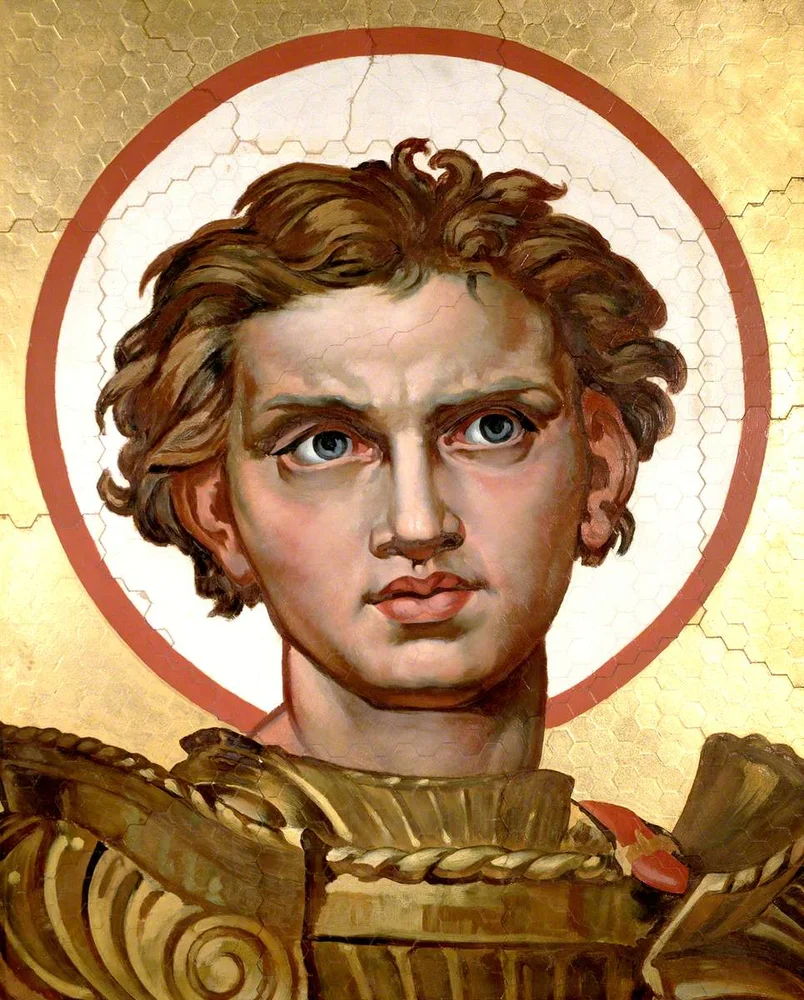
St George — England — 23 April. Artistic depiction, not an authentic likeness: Head of Saint George, a study for a mosaic.
E. J. Poynter · Parliamentary Art Collection, WOA 1986 · public domain; resized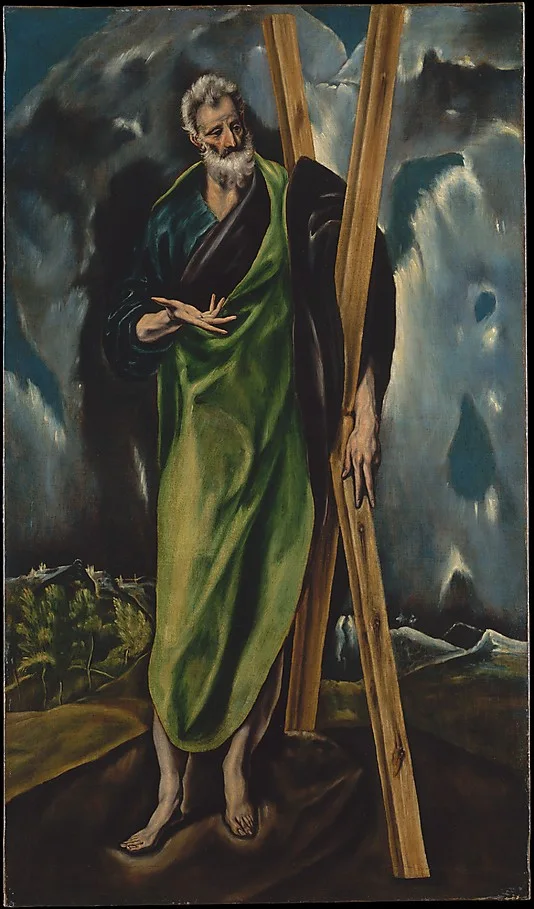
St Andrew — Scotland — 30 November. Artistic depiction, not an authentic likeness: Saint Andrew, workshop of El Greco, about 1610.
Workshop of El Greco · The Met, 61.101.8 · public domain; resized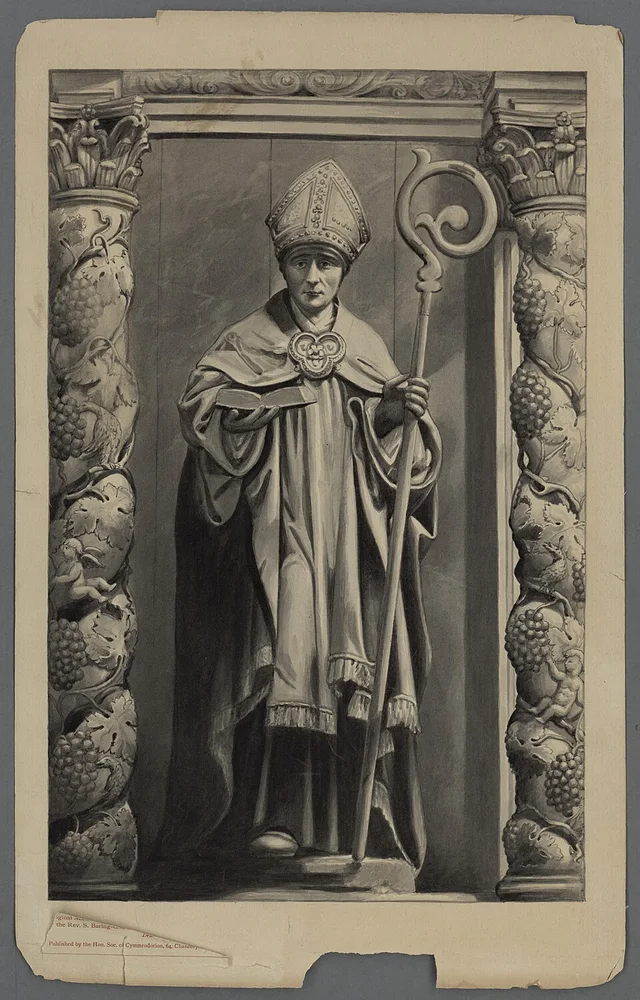
St David — Wales — 1 March. Historic artistic depiction, not an authentic likeness, from the National Library of Wales portrait archive.
Charles Head · National Library of Wales, 5292096 · public domain; resized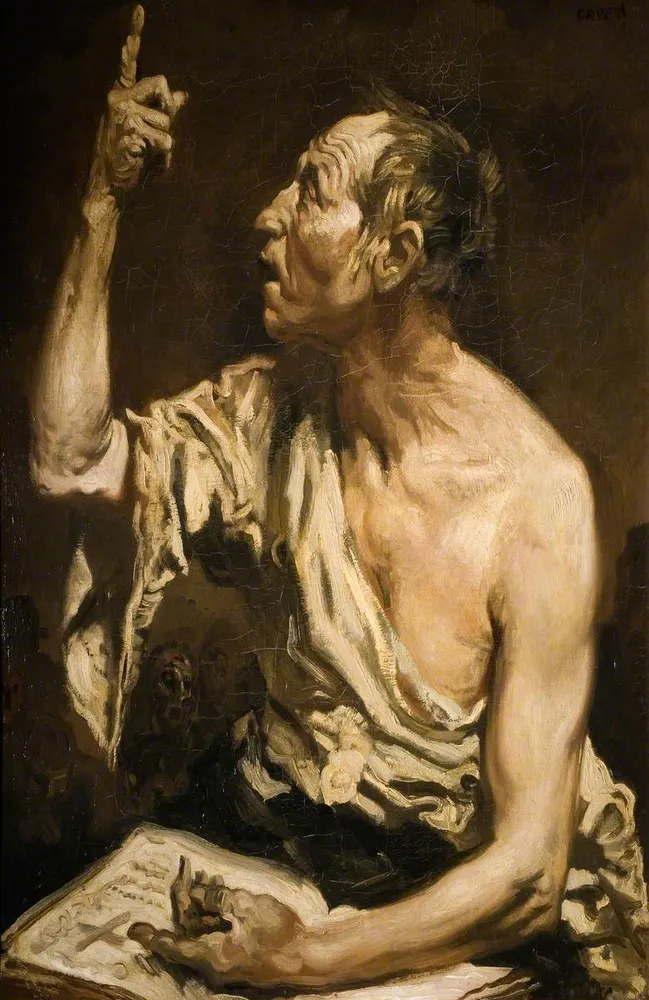
St Patrick — Northern Ireland and Ireland — 17 March. Artistic depiction, not an authentic likeness: St Patrick by William Orpen, 1905.
William Orpen · Potteries Museum & Art Gallery, 1936.FA.244 · public domain; resizedChristianity is only one part of the UK’s religious life. Communities include Muslims, Hindus, Sikhs, Jews, Buddhists, and people of other faiths or none. Everyone has a legal right to hold religious beliefs or no religion, subject to the same laws as other people.
Muslims worship in mosques, Jews in synagogues and Sikhs in gurdwaras. Hindus and Buddhists use temples. Christianity includes Anglican, Catholic, Baptist, Methodist, Presbyterian and Quaker traditions. The Church of Scotland is governed by ministers and elders; its General Assembly appoints a Moderator for one year. Wales and Northern Ireland have no established church.
The 2009 Citizenship Survey figures describe that survey, rather than today’s population. It recorded 70% identifying as Christian, 21% with no religion, 4% Muslim, 2% Hindu and 1% Sikh. Jewish and Buddhist responses were each below 0.5%, with 2% reporting another religion. Freedom of religion also protects people who follow no religion.
The 2011 Census in England and Wales recorded 59.3% Christian, 4.8% Muslim, 1.5% Hindu, 0.8% Sikh, 0.5% Jewish, 0.4% Buddhist and 25.1% with no religion. These are not today’s UK population figures: they describe England and Wales in 2011. For revision, retain the published figures of 59% Christian, 25% with no religion and 0.5% Buddhist; the Buddhist figure differs from the underlying ONS release’s 0.4%. Keep these 2011 figures separate from the older 2009 Citizenship Survey, which recorded 70% Christian.